
To enter The Trial in FH6, earn the Gold Wristband, then choose a car that meets the active event restriction and race for the team result. This guide explains access, preparation, cooperative driving and reward checks, using Red vs. Blue from November 12-19, 2026 as a dated example. Facts were checked on November 17; the next rotation can change the allowed cars and routes.
Unlock The Trial through the Horizon Festival
The Trial is a cooperative team-racing event on the FH6 Festival Playlist. It is not a general name for every seasonal race, and it is not the four-chapter Weekly Challenge. Forza's official Horizon Decades announcement describes its return as a six-versus-six, best-of-three showdown, with access reserved for Horizon Legends who have earned the Gold Wristband. That campaign requirement is the first thing to check when the event is unavailable.
Start by opening the active Playlist and reading the Trial card itself. Confirm the season, event name and any access message. If your Festival progression is unfinished, buying an eligible car or copying a tune does not bypass the campaign gate. Work toward the required Wristband, then return to the seasonal activity while its window remains open.
Check the Gold Wristband rather than a generic online rank
FH6 uses several progression systems. The Festival Wristband path and Discover Japan Stamps are related parts of the overall game, but they are not interchangeable currencies. The official progression overview identifies seven Festival Wristbands and names Gold as the Horizon Legend milestone. Completing exploration activities does not, by itself, establish that you have satisfied that Festival gate.
Use the FH6 campaign walkthrough to identify the next event on your own progression path. Read the current Wristband requirement and complete the assigned gate rather than chasing an invented universal level threshold. The time needed depends on what you have already finished; there is no reliable reason to promise every new player access within a fixed number of hours.
Once the campaign condition is met, separate it from any connection or platform-access problem. A locked activity, an ineligible car and a matchmaking error are three different observations. Record the exact message so you can address the right one. If the card is accessible but the session will not start, rechecking your route toward Gold will not explain a service outage; if Gold is missing, restarting matchmaking will not earn it for you.
The official Series 2 announcement is the source for the stated access and team format. Read current in-game notices as well, especially after later updates. A historical unlock explanation remains useful, but it should not override a new restriction displayed on the active event.
Read this week's Trial before choosing a car
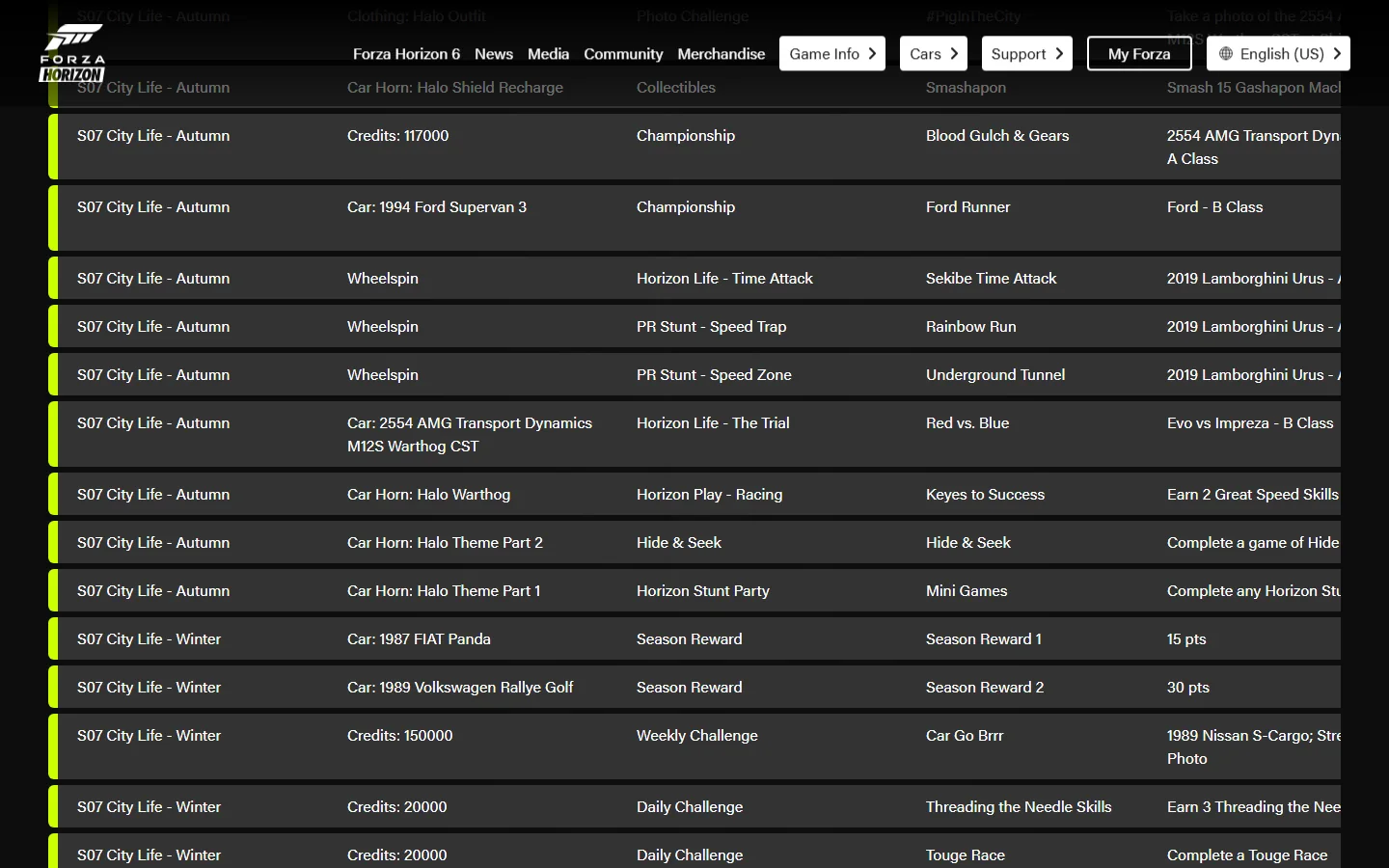
As of November 17, 2026, the official City Life Autumn table lists Red vs. Blue for November 12-19. Its restriction is Evo vs Impreza, B Class, and its Road Racing route list is Shirakawa Circuit, Hokubu Circuit and Shikisai Sprint. The listed car reward is the 2554 AMG Transport Dynamics M12S Warthog CST. Those details identify one dated Trial, not a permanent configuration for every week.
| Check | Dated Red vs. Blue example | Why it matters |
|---|---|---|
| Vehicle restriction | Evo vs Impreza | A general favorite from another manufacturer is not an alternative merely because it is fast. |
| Class | B Class | The installed build must match the active restriction, not just the stock catalog label. |
| Discipline | Road Racing | Prepare for the listed road routes rather than copying an off-road setup. |
| Reward | M12S Warthog CST | The reward vehicle is not the vehicle restriction for entering this Trial. |
That last distinction prevents an expensive mistake. A car displayed as the prize does not necessarily qualify for the event that awards it. Read the requirement field separately from the reward artwork. The Warthog can be useful for a different active card, but its presence in the reward column does not turn Red vs. Blue into a Warthog race.
Open the current Garage or Autoshow Playlist filter when selecting a candidate. The November 2 update added special-restriction filters to make eligibility easier to inspect. Confirm the actual event and installed configuration before buying. A database's base class or a creator's title is useful for discovery, but neither replaces the game's eligibility check for this week's race.
After the week ends, use the same reading process with the new card. Compare date, restriction, class, discipline and route list before reusing a saved build. A successful car from last week can be ineligible this week without anything being wrong with matchmaking. If you plan to use a newly earned reward in another chain, the Weekly Challenge guide explains how to keep those separate objectives in order.
Build an eligible car you can drive consistently
A useful Trial car is one that passes the event restriction and lets you finish cleanly. Maximum power is only one part of that decision. Compare braking stability, corner exit and how easily you can avoid contact in a crowded opening. A configuration that is difficult for you to control can turn an apparent straight-line advantage into lost positions and trouble for teammates.
Compare class, restriction and route together
For the dated Evo-versus-Impreza example, the 2004 Mitsubishi Lancer Evolution VIII MR, 1995 Mitsubishi Lancer Evolution III GSR and 2004 Subaru Impreza WRX STi are recognizable model identities to look up in your Garage. They are starting points for inspection, not a claim that every version or installed build automatically qualifies. Check the exact car against the active restriction and the game's current class display.
The Lancer Evolution VIII MR catalog entry helps distinguish that model from a different year or Welcome Pack variant. The current event filter should decide actual eligibility. Be cautious about a third-party database's stock label: updates, imported data errors and a saved tune can all make a general catalog description a poor substitute for the selected in-game build.
Use the route list to decide which behavior deserves attention. On a circuit, repeated braking and corner exits can matter more than a dramatic top-speed figure. On a sprint, a predictable car can help you recover from an unfamiliar sequence without missing checkpoints. Adjust one part of the setup at a time, then compare a representative section instead of judging the whole build from a single launch.
Treat share codes as configurations that need checking
A share code should identify an FH6 setup for the exact car and intended activity. Confirm the game, model, creator, class and purpose before installing one. A code copied from FH5, a different model year or a dirt event is not reliable evidence that the build fits this week's Road Trial. This guide does not invent a code or present an unverified community recommendation as a tested winner.
After applying a setup, recheck eligibility and drive enough to understand its braking and cornering. Note unusual behavior before entering matchmaking. If a creator describes a demanding power build, decide whether you can use it consistently around teammates. A slightly less aggressive configuration that you can place accurately can be a sensible personal choice even when it is not a leaderboard favorite.
Keep one known, eligible setup saved. That makes it easier to compare changes and return to a stable baseline when an experiment fails. A clear starting point is more useful than repeatedly installing unrelated tunes without knowing which model, class or handling change affected the result.
Race for the team instead of fighting your teammates
The Trial's objective is a team result against the opposing drivers. Your own finishing position matters, but overtaking a teammate is not the same strategic gain as moving ahead of an opponent. Read the live team score and final results rather than treating an individual podium as proof that the championship is won. The official best-of-three format rewards winning the required team races, not simply setting one fast personal lap.
At the start, leave room for another player to brake. A late dive into a crowded first corner can push a teammate outside a checkpoint or into a barrier, turning one attempted gain into several lost positions. If the road is blocked, an earlier lift can preserve control and keep more of your team in contention. There is usually more useful racing available after the opening congestion than during a collision in the first braking zone.
Overtake where the other driver can predict your line. Build the pass on corner exit or a clear straight, leave space through the next bend and avoid moving abruptly across a teammate's nose. If a teammate has a much stronger run, do not turn a defensive move into a battle that gives the opposing cars an easy escape. Cooperation does not require identical pace; it requires avoiding unnecessary harm to the shared result.
Pay particular attention to checkpoints. A stable line through the gate is more valuable than a spectacular shortcut that fails to count. When you make an error, recover safely instead of cutting across approaching traffic. Rejoining unpredictably can compound the original mistake and damage another player's race. Use the available road and watch the surrounding cars before returning to the main line.
Blocking an opponent should never become an excuse to ram players. A deliberate, predictable racing line is easier for teammates to work with than erratic weaving. If your car struggles in a particular corner, focus on staying within its limits and leaving a safe route through. A clean finish with useful positions against the rival team can contribute more than an attempt to win every confrontation.
After each race, inspect the team outcome. Separate your own mistake from a team-wide issue: several missed checkpoints, an ineligible preparation choice or unfamiliar braking points call for different changes. The next attempt should answer a specific problem. Merely adding power after every loss can make a difficult car less predictable without improving the cooperation that the event actually demands.
Use the route list to prepare for the next race
The route list turns a vague request for the best Trial car into a more useful preparation task. For the dated Red vs. Blue example, identify Shirakawa Circuit, Hokubu Circuit and Shikisai Sprint before joining. You do not need a claimed world-record setup to benefit from knowing where the event goes. Familiarity with the next braking zone can prevent a much larger loss than a small theoretical difference between two cars.
Check the event names carefully when several routes share a regional label. A circuit and a sprint are not interchangeable because both pass through the same part of Japan. Use the map's exact name and the listed discipline. Preparing on a similarly named dirt route will not teach the same sequence as the road course in the Trial table.
Forza's progression guide says that completing a race for the first time unlocks Race Customizer for that event. That can provide a way to revisit a route with an owned car and chosen conditions. A custom replay is practice, however, not a substitute for finishing the live Trial. Keep any practice result separate from the active Playlist check.
A short practice plan for unfamiliar circuits
Start by identifying the first significant braking point and the exit that follows it. Choose an obvious visual reference you can recognize from the driver's view. If you repeatedly miss the corner, brake earlier and establish a clean line before trying to carry more speed. Change one decision at a time so you know whether the improvement came from braking, positioning or setup.
Next, identify places where a mistake is especially costly: narrow checkpoint gates, barriers near corner exit and approaches where several cars may converge. Plan a conservative line for traffic as well as a faster line for an empty road. The objective is to understand your options when another player occupies the ideal position, not to rehearse a route that works only without opponents.
Finally, practice recovering from a small error without losing the next checkpoint. A race rarely follows an ideal line from start to finish. Knowing how to slow down and rejoin predictably can make the car more useful to the team than one additional power upgrade. Save the stable build and return to the live event with a specific plan for the opening and the sections that caused trouble.
Confirm the team result and resolve missing rewards
At the end of the event, inspect the team championship result and the active Playlist card. Winning one race is not necessarily the same as winning the best-of-three team contest. Likewise, being your team's highest individual finisher does not prove that the shared result met the requirement. Keep the final result screen long enough to understand what it actually says.
Then compare the listed reward with the inventory or balance you are checking. In the dated Red vs. Blue example, the car prize is the Warthog CST. Confirm the precise vehicle entry rather than searching only by a nickname. If you already owned that car, inspect whether the reward process created the expected additional item or otherwise changed the relevant record; do not rely only on a recollection of your previous Garage contents.
If the card shows complete but the reward appears absent, preserve both observations. If the card remains unfinished, save the championship outcome and the exact event identity. These are different reports, and they need different evidence. Do not automatically repeat the full contest without checking whether the first attempt actually completed the requested team objective.
Connection errors deserve their own diagnosis. A disconnect during matchmaking, a session ending before its result and a completed event with an unchanged card are not the same failure. The server-status and connection guide can help identify the relevant service check. Keep the error message, platform and time, especially if other online activities are also unavailable.
For a reproducible completion problem, use the official Forza reporting route and provide the Series, season, Trial name, car, build restriction and final result. State whether you completed the event or lost access before the end. Attach the relevant screens without exposing private account information. A concise sequence is more useful than a broad claim that every seasonal event is broken.
Finally, distinguish rules for other activities. The November update changed solo Seasonal Championship difficulty, but that does not by itself establish a matching change to The Trial. Read the current Trial card and its notices. Prepare for the event you are actually entering, preserve a stable eligible build and use the team result as the measure of success. That process remains useful when next week's cars and routes change.
Comments (0)
Sign in with Google to leave a comment.